
Whether you’re shopping for a drum set for adults, a kids drum set or simply just browsing, we’ve got you covered.

Planning on buying your first drum set? This is such an exciting step, whether it’s for yourself, your child or a drum set for teenager just getting started. But with so many options out there such as acoustic drum sets, electronic drum kit beginner sets and more, it can be hard to know where to start and which one to buy.
That’s where this guide comes in. We will walk you through everything you need to know, from the different types of drums, drum set parts and edrum kit options, to choosing the right drum equipment set for your age, skill level and space.
What’s the Difference Between a Drum Set and a Drum Kit?
If you’re new to drumming, you might wonder if there's a difference between a drum set and a drum kit. The good news? They’re the same thing. Both terms refer to the complete setup of drums and cymbals a drummer uses to play. In most cases, a standard drum kit or drum set includes a bass drum, snare drum, two or three toms, a hi-hat and at least one crash or ride cymbal.
The terminology often comes down to personal or regional preference. For example, “drum kit” is commonly used in the UK, while “drum set” is more popular in North America. Some people may use “kit” to refer to the overall configuration or style, like a jazz kit or rock kit, but both terms are interchangeable in everyday use.
So whether you're buying your first drum kit or drum set, know that you're looking at the same essential collection of instruments to start your drumming journey.
What’s Included in a Drum Equipment Set?
A standard drum equipment set, also known as a complete drum kit, includes everything a beginner needs to start playing. Most beginner drum kits come as 5-piece sets, which typically include:
Bass Drum (Kick Drum)
Snare Drum
Two Rack Toms
One Floor Tom
In addition to the drums themselves, the set usually includes essential hardware such as:
Hi-Hat Stand and Cymbals
Crash/Ride Cymbal with Stand
Bass Drum Pedal
Snare Stand
Drum Throne (Seat)
Some packages may also include drumsticks and a drum key for tuning. With electronic drum kits, you’ll get rubber or mesh pads instead of acoustic drums, plus a sound module that controls the drum sounds.
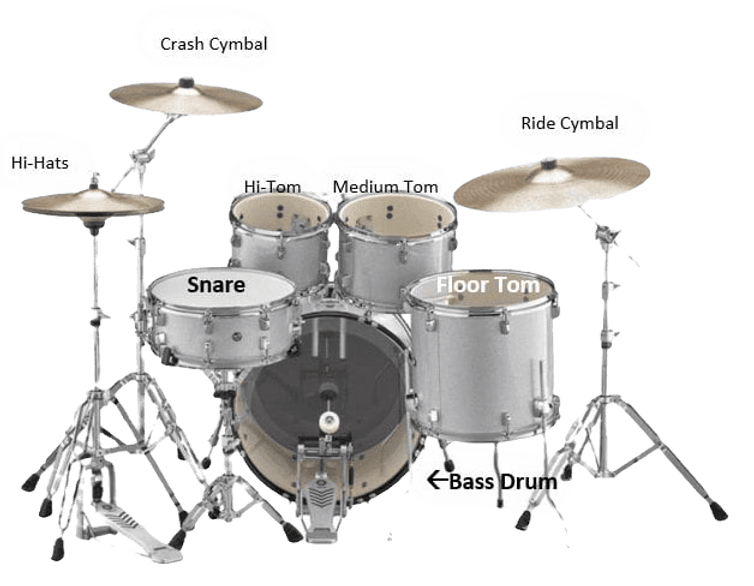
Types of Drums You’ll Find in a Standard Drum Set
A standard drum kit, whether that be acoustic or electronic, includes several key components, such as:
Bass Drum: This is played with a foot pedal and it provides the low-end "thump" that drives the beat.
Snare Drum: Known for its sharp, crisp sound, it's used for backbeats and accents.
Toms (Rack and Floor): These drums add depth and variety to your playing and are often used for fills.
Hi-Hat Cymbals: These are two cymbals mounted on a stand, played with a foot pedal and sticks.
Crash and Ride Cymbals: These are used for accents (crash) and steady rhythms (ride).
All that being said, these are the basic drum set parts found in most beginner drum kits, whether you're buying for a child, teen or adult.
Acoustic vs Electronic Drum Kits: Which Is Right for You?
Choosing between an acoustic drum set and an electronic drum kit depends on your space, volume needs and personal goals.
For starters, acoustic kits are the classic choice, providing a natural and dynamic playing experience. They produce real sound, offering drummers complete control over tone and dynamics, which is especially useful for live performances and improving touch sensitivity. Acoustic drums, on the other hand, are louder and require more space, which can be inconvenient in small homes or apartments.
Electronic drum kits, also known as edrum kits, are an excellent option for silent practice. They use rubber or mesh pads to activate digital drum sounds, which are sometimes accompanied by coaching tools, metronomes and various sound kits. They're great for beginners, students and anyone who wants to play without bothering others.
Overall, if you're just starting out, a small electronic drum kit for beginners may be a better option. However, if you intend to perform live or prefer the feel of genuine drums, acoustic may be the best long-term option.
Best Drum Sets for Beginners: What to Look For
Now that you know all of the basics, let’s take a look at the best drum sets for starters and what you should be looking out for.
When buying a beginners drum kit, look for a full 5-piece set that includes the important drum set parts such as the bass, snare, toms, hi-hat,and at least one crash or ride cymbal. Many drum sets for adults, teenagers and children have hardware (stands and pedals), sticks and a drum throne.
For absolute beginners, simplicity and durability matter more than fancy features. Choose a reliable brand with good reviews, like Pearl, Yamaha, Alesis (for edrums) or Ludwig. Also make sure that the kit matches the player’s size, since there are smaller drum sets for teenagers and children too.
Whether you're choosing an acoustic drum set or an electronic drum kit for a beginner, the best choice is one that encourages consistent practice, suits your space and is easy to play.
What You Need to Know When Choosing a Drum Set for Kids, Teens or Adults
When choosing a drum set for a child, teen or adult, size, setup and playability all matter.
Younger Children
For younger children around the ages of 4 to 10, a kids drum set is the best fit. These are scaled-down versions of full drum kits and are designed for smaller arms and legs, making it easier for kids to learn proper technique and stay comfortable.
Teenagers
For teenagers, consider a drum set for teens that’s slightly smaller than a full adult kit but still offers a realistic playing experience. Many teen-sized kits are adjustable and grow with the player.
Adults
Adults can go with a standard drum set size, available in both acoustic and electronic styles. That said, the right choice depends on their space, noise level and learning goals.
No matter the age, it’s important to choose a beginner drum kit that’s sturdy, includes all basic drum set parts and offers a fun, frustration-free playing experience that encourages regular practice.

We sometimes use affiliate links to products on retailer sites. If you click on those links and make purchases through them, we may receive a commission at no additional cost to you.