

How to Play Songs by Ear: 11 Simple Steps
- agnes9731
- Apr 16
- 8 min read

Have you ever listened to a song and thought, “I wish I could just sit down and play that without searching for sheet music or chords”?
It might seem like something only naturally gifted musicians can do, but the truth is much more encouraging. Learning how to play songs by ear is a skill that can be developed by anyone with the right approach and a bit of patience.
When you build this ability, music starts to feel more natural and enjoyable. You are no longer limited by what you can find online or read on a page. Instead, you begin to rely on your ears, your instincts and your understanding of sound.
In this guide, we will walk through simple and effective steps to help you learn to play by ear, along with practical advice that makes the process feel achievable and even fun.
How to Play Songs by Ear: 11 Simple Steps: Quick Menu
Why Learning to Play by Ear Matters

Before getting into the steps, it helps to understand why this skill is so valuable.
When you learn how to play songs by ear, you are training your brain to recognize relationships between notes, chords and melodies. You’re no longer just copying notes. You are understanding how music works.
This leads to several important benefits, such as:
You can quickly learn songs you love,
You improve your creativity and improvisation,
You develop stronger listening skills,
You rely less on sheet music,
You gain confidence as a musician.
If you have ever wondered how to play music without sheet music, this is the key. It gives you the freedom to explore music in a much more personal way.
Step 1: Start With Simple Songs
One of the most important play music by ear tips is to start simple.
It can be tempting to jump into complex songs right away, especially if you’re excited. However, difficult songs can slow your progress and lead to frustration.
Instead, choose songs that:
Have clear and simple melodies,
Use basic chord progressions,
Are played at a steady tempo.
Songs with fewer layers and instruments are easier to work with when you are starting out. By keeping things simple, you give your ear the chance to develop accuracy and confidence.
Step 2: Practice Active Listening
Listening is at the heart of ear training for musicians.
Instead of letting music play in the background, take time to really focus on what you hear. Try asking yourself:
Is it moving up or down?
Do you hear any repeating patterns?
Listen to the same song multiple times and focus on different elements each time. One listen might focus on melody, another on rhythm and another on harmony.
Active listening is what allows you to truly learn to play by ear instead of guessing.
Step 3: Start With the Melody
When working on how to play songs by ear, always begin with the melody.
The melody is the most recognizable part of a song. It’s what people usually hum or sing. Here is a simple way to approach it:
Listen to a short section of the song.
Pause and hum or sing the melody.
Try to find those notes on your instrument.
This step connects your ear directly to your playing. It may feel slow at first, but it becomes easier with practice.
Step 4: Break the Song Into Small Sections
Trying to figure out a whole song at once can feel overwhelming. Instead, break the song into smaller sections. Focus on:
One phrase at a time,
One short musical idea,
One line of melody.
Working in smaller pieces helps you stay focused and prevents frustration.
This is one of the most effective play music by ear tips and is used by musicians at every level.
Step 5: Use Trial and Error
Making mistakes is a natural part of learning.
When figuring out how to play music without sheet, trial and error is essential. Each wrong note helps you understand what does not fit. Over time, your ear becomes better at identifying:
When a note is too high.
When a note is too low.
When something sounds slightly off.
This process helps you develop a stronger sense of pitch and musical awareness.
Step 6: Recognize Patterns and Structure

Music is not random. It follows patterns. As you continue ear training for musicians, you will begin to notice:
Repeating melodies,
Common chord progressions,
Familiar note movements.
Many songs share similar structures. Once you recognize these patterns, learning new songs becomes much faster.
This is an important step in mastering how to play songs by ear with confidence.
Step 7: Add Chords Slowly
After you have figured out the melody, you can begin adding chords. Start simple and take your time. Listen for:
The mood of the song.
Changes in harmony.
The lowest note, which often indicates the chord.
Try basic chords and adjust as needed. If something sounds off, trust your ear and experiment. Adding chords is often the most challenging part, but it becomes easier as your listening skills improve.
Step 8: Slow Down the Music – H3
One of the most helpful tips is to slow the music down. Most apps and video platforms allow you to adjust playback speed. Slowing the song helps you:
Hear individual notes more clearly,
Focus on tricky sections,
And improve accuracy.
Even experienced musicians use this technique when learning new pieces.
Step 9: Use Singing to Strengthen Your Ear
Singing is one of the most powerful tools for improving your ear.
If you can sing a note, you can usually find it on your instrument. This is why singing plays a big role in ear training for musicians.
Students who take a singing lesson Toronto often improve faster because they are constantly working on pitch, tone and listening. Even if you are not a singer, humming along with melodies can make a big difference.
Step 10: Practice Regularly
Consistency is key when learning how to play songs by ear. You do not need to practice for hours. Short and focused sessions are more effective. Try this:
Practice for 10 to 20 minutes a day.
Focus on one small goal.
Repeat regularly.
Daily practice helps your ear develop naturally over time.
Step 11: Build Confidence Over Time
Learning how to play songs by ear is a gradual process. At the beginning, it may feel slow and challenging. That is completely normal. With consistent effort, you will start to notice:
Faster note recognition,
Improved accuracy,
Greater confidence.
Eventually, you will be able to sit down, hear a song and start playing it without much effort.
Common Mistakes to Avoid
Avoiding a few common mistakes can help you progress faster:
Choosing songs that are too difficult.
Start simple and increase difficulty gradually.
Relying too much on tutorials.
Use them as a backup, not your first step.
Ignoring the melody.
Always start with the melody before adding chords.
Giving up too quickly.
All that said, developing your ear takes time. Stay patient and consistent.
How Lessons Can Help You Improve Faster
While it’s possible to learn on your own, structured lessons can speed up your progress. A teacher can help you:
Develop your ear step by step.
Recognize patterns more quickly.
Stay motivated and consistent.
How Can GTMS Help?
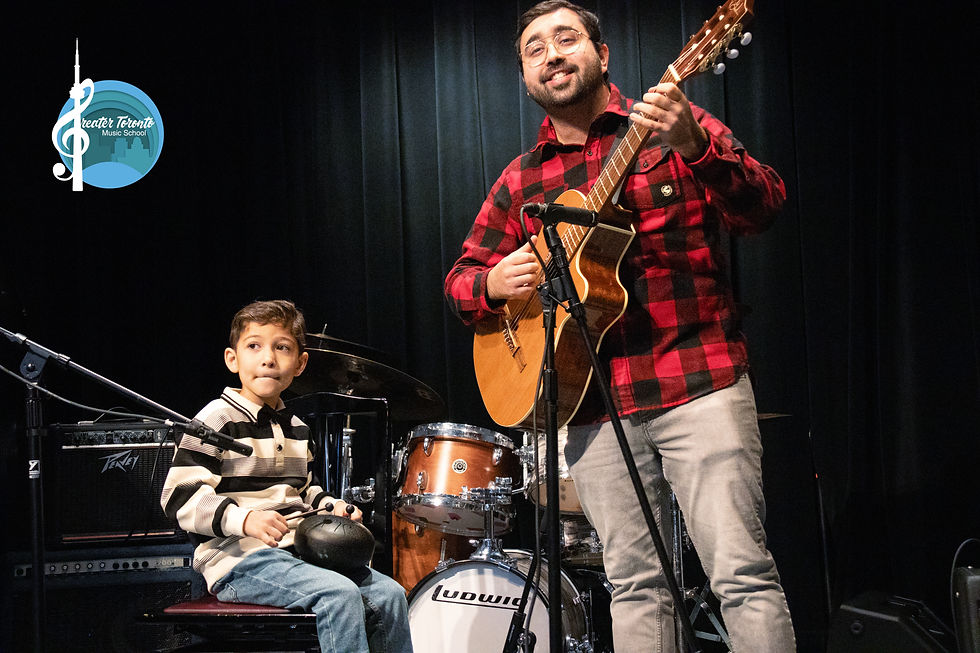
At Greater Toronto Music School, we focus on helping students build strong foundations while keeping lessons engaging and enjoyable. We guide students through ear training so they can confidently learn to play by ear and apply their skills in real musical situations.
Our teachers can help students:
Build Strong Ear Training Skills
Firstly, we focus on developing essential ear training skills so students can confidently recognize melodies, chords and musical patterns. This foundation makes learning songs by ear much easier and more natural over time.
Learn to Play by Ear Step-by-Step
Our teachers break down how to play songs by ear into simple, manageable steps. Students are guided through the process so they never feel overwhelmed and can see steady progress in every lesson.
Personalize Lessons for Faster Progress
Every student learns differently, which is why our lessons are tailored to your goals and level. Whether you are a beginner or more advanced, we help you learn to play by ear at a pace that works for you.
Develop Real Musical Independence
We teach students how to play music without sheets, helping them rely on their ears instead of memorization. This builds confidence and allows for more creativity when playing.
Improve Through Expert Feedback
Our instructors provide clear and supportive feedback, helping students apply practical tips and improve quickly.
Strengthen Listening Through Vocal Training
Our singing lesson Toronto programs help students improve pitch and listening skills, which directly supports playing music by ear.
FAQs: How to Play Songs by Ear
You may still have questions about how to play songs by ear, and that is completely normal. Here are quick answers to help guide you as you get started:
Q: Can beginners learn how to play songs by ear?
A: Yes! Beginners can start with simple melodies and gradually improve with consistent practice.
Q: How long does it take to learn to play by ear?
A: It depends on your practice routine. Some students notice progress within a few weeks, while others take a few months.
Q: Do I need perfect pitch to play music by ear?
A: No, most musicians use relative pitch, which can be developed through ear training.
Q: What is the best way to start ear training?
A: Start by listening to simple songs, singing melodies and matching notes on your instrument.
Q: Is learning how to play music without sheet music important?
A: Yes, learning how to play music without sheet helps you become more flexible and creative.
Q: Can singing improve my ability to play by ear?
A: Yes, singing improves pitch recognition and listening skills. Taking a singing lesson in Toronto can help you develop faster.
Start Your Musical Journey Today at GTMS
If you’re ready to improve your skills and confidently learn to play by ear, the right guidance can make all the difference.
At Greater Toronto Music School, we offer personalized lessons designed to help students build strong musical foundations while developing practical skills like how to play songs by ear and how to play music without sheet music.
Contact Greater Toronto Music School today to book your first lesson and start learning how to play songs by ear with confidence!


Comments